


This week we're going line-by-line through Taylor Swift's "The Man" (Lover, 2019), written by Taylor Swift and Joel Little, in a literary analysis deep dive on masculinity and the gender double standard. We pick apart the conditional mood, the alpha wolf myth, the "they" who write the narrative, and how a woman's personal life gets tangled up with her professional reputation. Then we compare the music video with the Eras Tour staging and share our purposes for the song.
Apple Podcast Subscribers can now listen ad free with a paid subscription!

🫶 Thank you for reading and listening. We’re a fully independent podcast: we write, produce, edit, and promote every episode ourselves, no team behind us.
If you’re able to support that with a paid subscription, here’s what it gets you: bonus episodes, our full Extra Credit archive, extra subscriber-only content, and a real say in what we cover next.
First 50 annual members get 40% off with our Wi$h Li$t Discount
Listen on Apple Podcasts? Paid subscribers there get ad-free episodes, early access, and bonus episodes too
💚 Engagement matters: a paid subscription isn’t the only way to help. Leave us a review on Apple or Spotify, drop a comment, subscribe for free, tap the heart, or send this to a Swiftie who’d love it. Every bit of it helps us reach more listeners and keep making the show!
This week on our social feed
Not sure where to start listening?
With over 130 original episodes, it can be hard to find exactly the episode you want to listen to. So we’ve created Spotify playlists by era and theme to help you find the perfect AP Taylor Swift episodes to listen to!
🤠 Debut Era ⭐ Fearless 🎆 Speak Now 🧣 Red 🌃 1989 🐍 reputation
💗 Lover 🪩 folklore 🍂 evermore 🕕 Midnights 📖 TTPD ❤️🔥 Showgirl
Book Episodes (Books, shows, movies) | Literary Theory & Rhetorical Device Episodes | Theme Episodes
📜 This Week’s Extra Credit by Jodi
When I was a bright-eyed, ambitious 23-year-old working my first corporate job, my boss told me I had an edge. I didn’t disagree—while I have a bubbly, chatty personality, I was direct when I expected an answer, and could be curt when I felt someone wasn’t working up to my standards. “You’d go further if you softened your edge,” he said.
I wish I could tell you that instead of immediately internalizing this feedback that I pushed back with a “would you say the same thing to a man?” But I didn’t. Instead, I softened my interactions with “how are you doings” and “how was your weekend” before gently asking for what I needed. I apologized, I hedged, I added conditions and maybes and perhapses. Anything to appear less direct.
I don’t think it was until I went to business school years later, during the “Lean In” and “girl boss” eras, that I second guessed this feedback. And it certainly wasn’t until “The Man” came out on Lover in 2019 that I had a way to contextualize the double standard in front of me: If I was a man, I’d be direct and decisive. Having an “edge” would be a good thing, it’d be what makes people call me competent and successful.
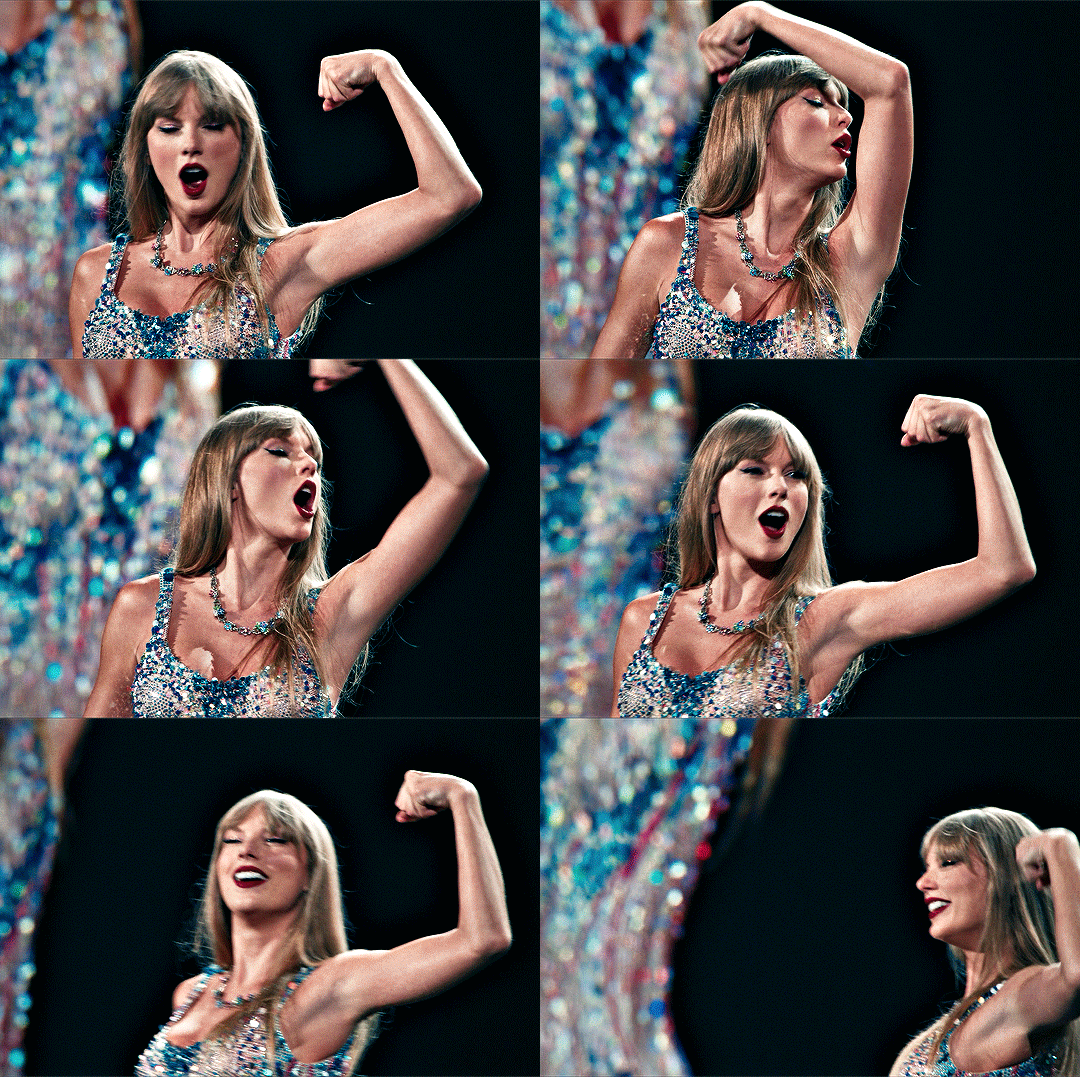
“The Man” questions the double standard in society that treats men and women differently for taking the same actions. Written during the girl boss era, it calls into question whether that advice actually works. The prevailing leadership advice of the time was for women to demand a seat at the table and assert ourselves just like men do. Do that, and you’ll be taken seriously, you’ll grow your career, you’ll be seen as a leader.
And yet despite doing just that, as Taylor sings, “if I was out flashing my dollars I’d be a bitch not a baller, they’d call me out to be bad.” With a poppy beat and a catchy chorus, Taylor proclaims that women simply cannot act like men and expect to be treated the same. Women are measured and perceived differently, held to different, often much higher standards, and we have every right to be mad about it!
Taylor long exhibited the clear vision, consistent follow-through, and firm decision-making skills that traditionally characterize strong leaders. It’s with “The Man” that she acknowledged that playing by the same rules as men won’t change people’s perceptions of her, so she might as well write and play by her own rules. So what do these new rules look like?
For Taylor, it starts with control and ownership. The music video for “The Man” marked Taylor Swift’s first solo-directorial debut. While she co-directed her other three “Lover” music videos, for this one she literally was The Man who everyone had to look to for direction and vision and execution. This song came out on the first album she fully owned, after leaving her long-time record label, Big Machine Records, after a dispute over ownership over her master recordings.
Beyond ownership, there’s leading with authenticity and vulnerability—two characteristics often seen as a weakness in men, but can be wielded as a strength for women. In “Miss Americana” Taylor shared, “I needed to get to a point where I was ready, able and willing to call out bullsh*t rather than just smiling my way through it.” That’s a pretty big shift from a self-proclaimed people-pleaser who admitted how important it was for her as a girl for others to approve of her and her actions. It’s during this documentary—filmed largely during the 2017-2019 time period when she wrote “Lover,”—that we see Taylor at her most vulnerable. If she had a feeling, she embraced it rather than hiding it to please others, as we saw when she defied her father to call out Marsha Blackburn in the 2018 midterm elections. She led by example, and opening up about her struggles and insecurities, as well as standing her ground on her values and opinions, made Taylor even more approachable to her fans.
Was she criticized for her vulnerability, for sharing her political views, and for fighting for ownership of her masters? Absolutely. People questioned her personal choices and business decisions. But that criticism stings less if she’s confident in her actions and decisions. That confidence comes from no longer trying to play by someone else’s rules. It comes from doing what feels right to you, even if other people will chastise you for it.
Which brings me back to my “edge”. I’ve come to appreciate that my boss made me aware of being seen as having an edge. Because now I can use it carefully—be direct and straightforward where I feel I need to, but soften my edges so as not to draw blood when I don’t intend to. Will I be criticized for being too direct? Probably. But if I feel confident my approach was warranted, then I’m OK being seen as having an edge. Even if they’d never see if that way if I was a man.